FREE Shipping on orders above ₹999

FREE Shipping on orders above ₹999
FREE Shipping on orders above ₹999

by p+care
Author
Introduction
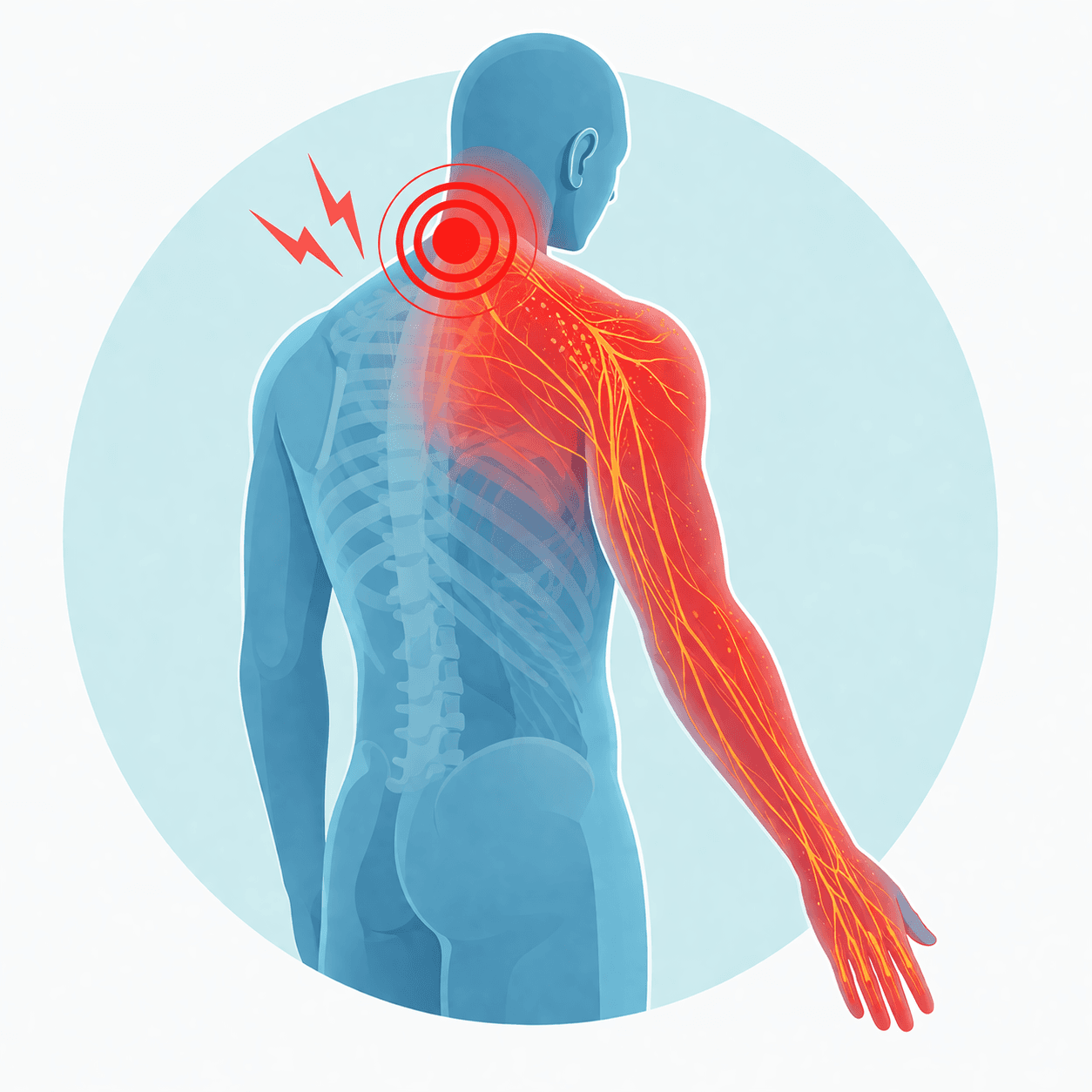
Pain that begins in the neck and radiates down the arm can be both uncomfortable and concerning. This type of pain is often associated with a condition known as cervical radiculopathy, which occurs when a nerve in the neck becomes compressed or irritated.
Unlike simple neck pain, cervical radiculopathy can cause symptoms that extend beyond the neck, including tingling, numbness, or weakness in the shoulders, arms, and hands. These symptoms can interfere with daily activities such as typing, lifting objects, or even holding a phone.
With early diagnosis, proper rehabilitation, posture correction, and the use of supportive orthopaedic aids, most individuals can manage cervical radiculopathy effectively without surgical intervention.
Understanding the Cervical Spine and Nerves
The cervical spine consists of seven vertebrae (C1–C7) located in the neck region. Between these vertebrae are intervertebral discs that act as shock absorbers and allow smooth movement.
Nerves exit the spinal cord through small openings between the vertebrae. These nerves travel into the shoulders, arms, and hands, controlling movement and sensation.
When one of these nerves becomes compressed, it can lead to the symptoms of cervical radiculopathy.
What Is Cervical Radiculopathy?
Cervical radiculopathy is a condition caused by compression or irritation of a nerve root in the cervical spine. This compression can result from disc problems, bone changes, or narrowing of the nerve passage.
The condition is often referred to as a “pinched nerve in the neck” and can affect one or more nerve roots.
Common Causes
Several conditions can lead to nerve compression in the cervical spine:
1. Cervical Disc Herniation
A bulging or herniated disc may press on nearby nerves.
2. Cervical Spondylosis
Age-related degeneration can lead to bone spurs and reduced disc height.
3. Foraminal Stenosis
Narrowing of the spaces through which nerves exit the spine.
4. Poor Posture
Forward head posture increases stress on cervical structures.
5. Repetitive Neck Strain
Prolonged desk work or mobile phone use.
Understanding the underlying cause helps guide treatment.
Common Symptoms
Symptoms depend on the affected nerve root and may include:
Symptoms may worsen with certain neck movements.
Risk Factors
Factors that increase the likelihood of cervical radiculopathy include:
Preventive measures can reduce risk.
Diagnosis and Clinical Evaluation
Diagnosis typically involves:
Accurate diagnosis ensures appropriate management.
Conservative Treatment Approach
Most cases of cervical radiculopathy improve with non-surgical treatment.
1. Activity Modification
Avoid movements that aggravate symptoms.
2. Pain Management
Short-term medication may be prescribed under supervision.
3. Physiotherapy
Exercises improve strength, flexibility, and nerve mobility.
4. Posture Correction
Reduces stress on cervical structures.
Surgery is considered only in severe or persistent cases.
Role of Orthopaedic Cervical Supports
Cervical supports are often used to provide relief during acute pain phases.
How Cervical Supports Help
They are typically used for short durations under guidance.
Types of Cervical Supports
Selection depends on symptom severity and medical advice.
Importance of Rehabilitation
Rehabilitation plays a key role in long-term recovery and prevention.
Key Goals
Gradual progression is essential to avoid aggravation.
Daily Care and Ergonomic Adjustments
Daily habits significantly influence recovery:
Small changes can greatly reduce strain on the neck.
Common Mistakes Patients Make
Balanced care promotes better recovery.
When to Seek Medical Attention
Consult a healthcare professional if:
Early intervention prevents complications.
Long-Term Outlook
Most individuals recover with conservative care. Long-term outcomes improve with:
Preventive care reduces recurrence risk.
Conclusion
Cervical radiculopathy is a common condition caused by nerve compression in the neck, leading to pain and neurological symptoms in the arm. Although symptoms can be distressing, most cases respond well to conservative treatment.
A combination of rehabilitation, posture correction, and appropriate use of cervical supports can significantly improve recovery and prevent future episodes. With proper care and awareness, individuals can maintain neck health and continue daily activities with comfort and confidence.